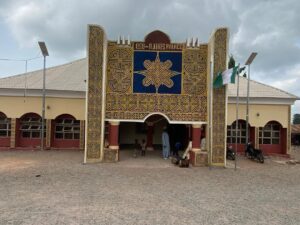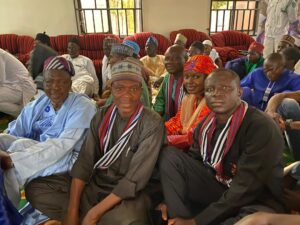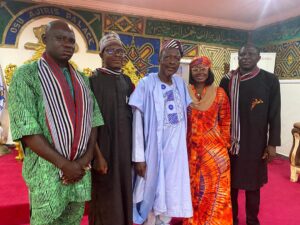
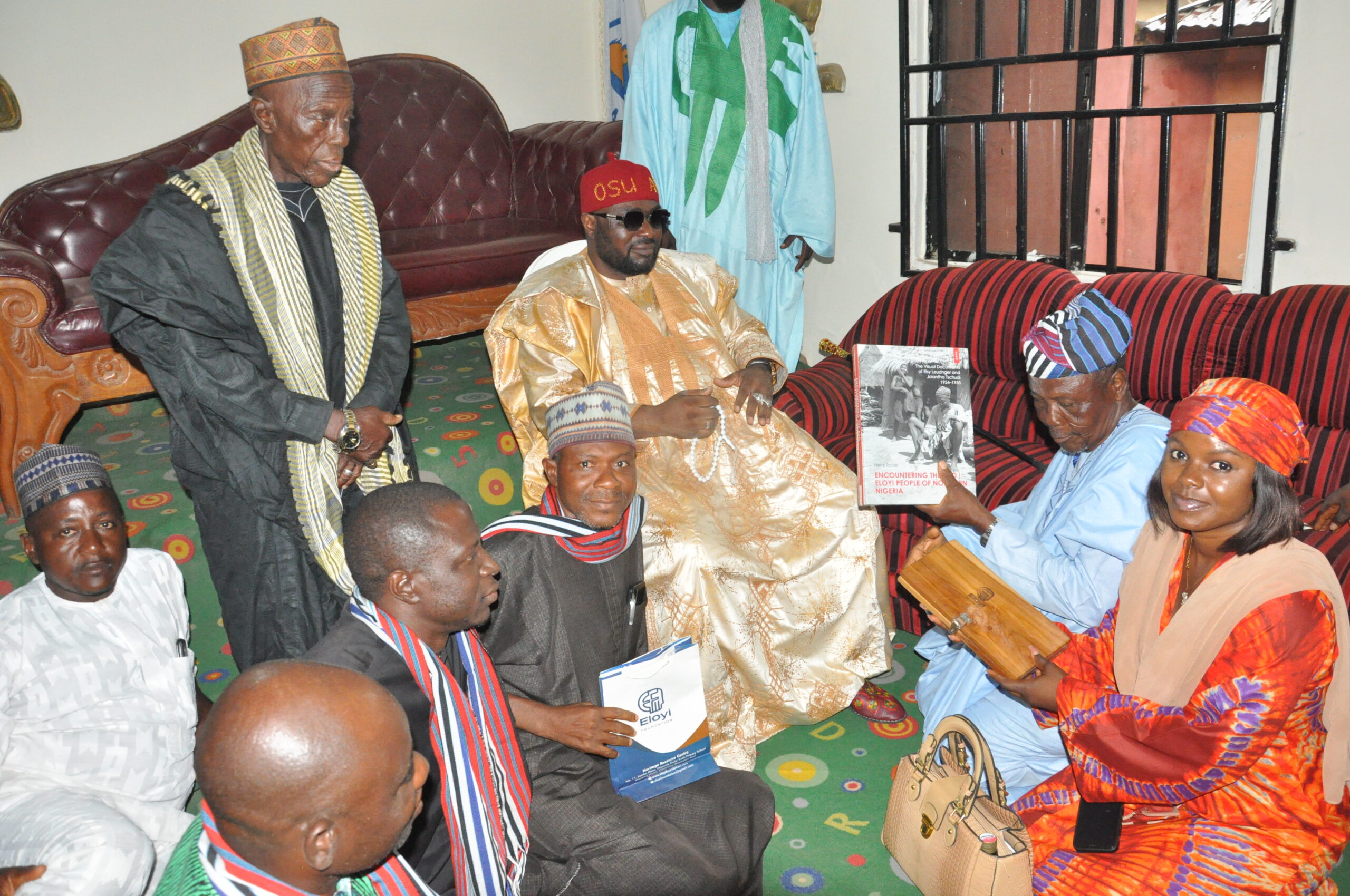
The Eloyi Foundation was honoured to meet with His Royal Highness Suleiman Ahmed-Eko, Osu Ajiri, to mark his accession to the throne, formally introduce the Foundation and its work, and explore opportunities for meaningful collaboration in service of the Eloyi people of Central Nigeria.
The visit was both a gesture of respect and the beginning of what we hope will become a lasting partnership. We congratulated His Royal Highness on his accession and shared the vision of the Eloyi Foundation: to preserve, document, promote, and celebrate the history, culture, language, traditions, and identity of the Eloyi people while using heritage as a foundation for education and community development.
A Shared Commitment to Eloyi Heritage
As Osu Ajiri, His Royal Highness carries responsibilities that closely connect with the mission of the Eloyi Foundation. Among these responsibilities is the preservation and custodianship of Eloyi cultural values, traditions, rites, and ancestral knowledge.
This role is particularly important at a time when indigenous languages, oral histories, traditional practices, and cultural knowledge face the risk of being forgotten or gradually lost.
Cultural heritage is not simply about looking into the past. It is about understanding who we are, where we come from, and what we have a responsibility to pass on to those who come after us.
The traditional institution remains an important part of that process. The throne of Udege represents more than political or traditional authority; it is also a living repository of collective memory, identity, customs, stories, and values that have been passed from generation to generation.
Preserving the Eloyi Language, Stories and Traditions
For the Eloyi people, preserving our heritage means preserving the things that make our community distinct.
Our language carries knowledge.
Our stories carry memory.
Our traditions carry identity.
Our cultural practices connect generations.
When these things are documented and actively practised, they remain accessible to future generations. When they are neglected, valuable knowledge can disappear with the people who carry it.
The Eloyi Foundation is committed to contributing to this preservation through documentation, digitisation, education, research, intergenerational knowledge sharing, and the development of accessible cultural resources.
We believe that cultural preservation should not be limited to museums or historical records. It should be something communities can actively participate in and something young Eloyi people can encounter, understand, and take pride in.
Preserving the Past for Future Generations
During the visit, we were honoured to present His Royal Highness with a copy of Encountering the Eloyi People of Northern Nigeria, a visual record documenting the Eloyi people between 1954 and 1955.
The historical record offers an important window into the lives, appearance, environment, customs, and experiences of the Eloyi people during that period.
For us, works such as this are more than historical documents. They are bridges between generations.
They remind us that the people who lived before us were not simply figures in history. They were our grandparents, great-grandparents, ancestors, and communities whose lives contributed to the identity we carry today.
Documenting our past is one of the ways we hand it to the future.
Building Partnerships for the Eloyi People
The meeting also provided an opportunity to discuss areas where the Foundation and the traditional institution can work together.
We believe that meaningful heritage preservation requires collaboration between traditional leaders, community members, researchers, educators, cultural organisations, young people, and development partners.
Potential areas of collaboration include cultural documentation, preservation of oral histories, promotion of the Eloyi language, educational initiatives, digitisation of historical materials, cultural awareness programmes, and grassroots development projects that directly benefit Eloyi communities.
By bringing traditional knowledge and contemporary approaches together, we can create sustainable ways of protecting Eloyi heritage while ensuring that it remains relevant to younger generations.
The Role of Traditional Institutions in Cultural Preservation
Traditional institutions have a unique role to play in preserving indigenous heritage.
Long before modern archives, libraries, and digital databases, communities relied on elders, traditional rulers, families, storytellers, and cultural custodians to preserve collective knowledge.
Their memories and experiences provide context that cannot always be captured in written records.
For this reason, partnerships with traditional institutions are essential to responsible cultural documentation. They help ensure that heritage preservation is connected to the communities whose history and identity are being preserved.